
Festive Holiday Antipasto Cheese Log Recipe
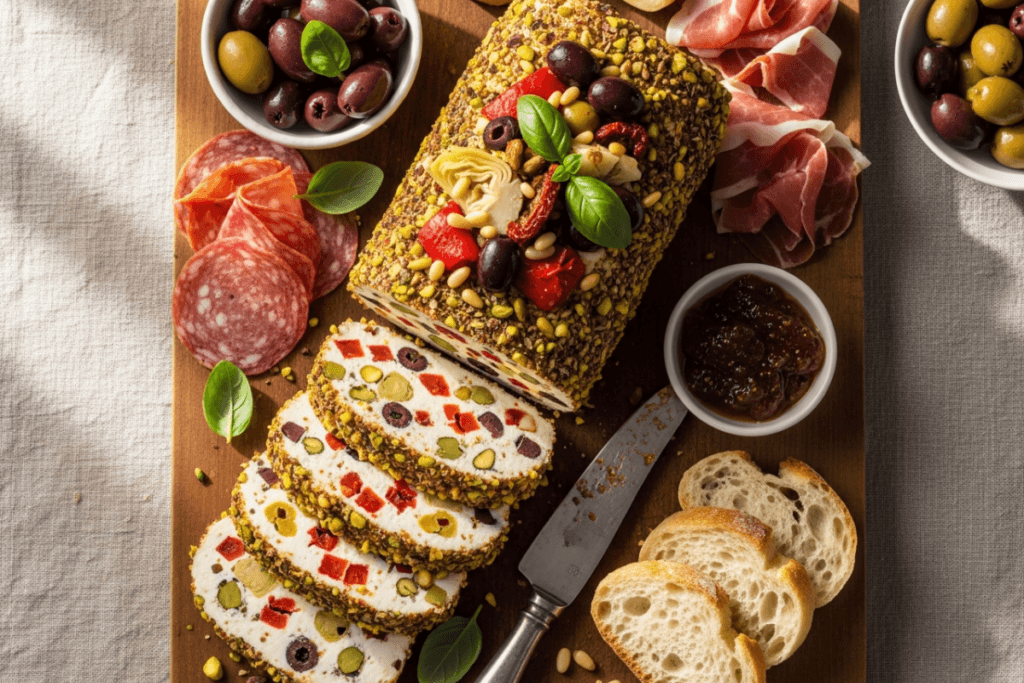
If there is one appetizer that screams sophisticated holiday entertaining while demanding minimal kitchen time, it’s the Antipasto Cheese Log. This isn’t your grandma’s basic cheese ball; it’s a creamy, flavor-packed celebration of classic Italian antipasto ingredients, guaranteed to be the centerpiece of your next party, from New Year’s Eve to a simple game day gathering.
Table of Contents
This comprehensive guide covers everything from the foundational cream cheese mixture to pro tips on achieving a perfect, dazzling presentation.
Why You Need This Antipasto Cheese Log Recipe
- Goal: The user wants a reliable, easy-to-make, and impressive appetizer recipe that can be prepared ahead of time.
- Solution: The Antipasto Cheese Log is fully customizable, requires no baking, and is best when made a day in advance, making it the ultimate stress-free appetizer for busy hosts.
Essential Ingredients and Entities
The beauty of a cheese log lies in its simple, high-impact components. We focus on balancing creamy, tangy, salty, and savory flavors.
The Creamy Base (The Log Foundation)
| Ingredient | Role in the Recipe | Key Entity Notes |
| Cream Cheese | Provides the structure and creamy texture. | Ensure it is fully softened (usually 1 hour at room temperature). |
| Goat Cheese | Adds a necessary tangy, slightly acidic counterpoint. | Use a plain, unflavored variety for the best balance. |
| Parmesan Cheese | A depth of salty, nutty umami flavor. | Freshly grated is non-negotiable for texture and taste. |
The Internal Flavor Burst (The Antipasto Mix)
- Sun-Dried Tomatoes: For chewy texture and intense, sweet-tart flavor. Use the oil-packed variety, drained well.
- Kalamata Olives: Briny, fruity saltiness. Essential for the antipasto profile.
- Artichoke Hearts: Tender, slightly sour vegetable component. Use jarred/canned, drained and chopped.
- Fresh Basil: A burst of fresh, peppery aroma and color.
The Dazzling Exterior (The Coating)
- Finely Chopped Salami or Prosciutto: Provides a textural contrast and deep, savory flavor. Salami (Genoa or Soppressata) holds its shape better.
- Toasted Pine Nuts: For crunch and a buttery, rich finish.
- Fresh Parsley: For vibrant green color and visual appeal.
Step-by-Step Instructions for the Perfect Antipasto Cheese Log
Follow these simple steps for a flawless cheese log every time.
Step 1: Prep the Components
- Soften the Cheeses: Ensure $8\text{ oz}$ of cream cheese and $4\text{ oz}$ of goat cheese are fully softened to prevent lumps.
- Chop the Mix-Ins: Finely chop the sun-dried tomatoes, olives, and artichoke hearts. Pat them dry with a paper towel to remove excess moisture—this is crucial for log integrity.
- Combine the Base: In a large bowl, use an electric hand mixer or sturdy spatula to beat the cream cheese, goat cheese, and $1/2$ cup of grated Parmesan until completely smooth and homogeneous.
Step 2: Fold in the Antipasto
- Gently fold the chopped sun-dried tomatoes, olives, artichokes, and chopped fresh basil into the cheese mixture. Do this by hand using a spatula to avoid over-mixing, which can cause the log to weep moisture.
- Taste and adjust seasoning: add a pinch of freshly ground black pepper. Since the mix-ins and cheeses are salty, you likely won’t need extra salt.
Step 3: Shape and Chill
- Place a sizable piece of plastic wrap on your countertop. Transfer the complete cheese mixture to the middle of the plastic wrap.
- Using the plastic wrap, form the mixture into a log shape, about $8-9$ inches long. Roll it tightly to ensure a dense shape with no air pockets.
- Chill Time: Place the wrapped log in the refrigerator for a minimum of 4 hours, but ideally overnight (up to 2 days). This is the key to a sliceable, stable log.
Step 4: Coat and Serve (The Grand Finale)
- Prepare the Coating: On a flat plate or shallow dish, mix the finely chopped salami/prosciutto, toasted pine nuts, $1/4$ cup of grated Parmesan, and chopped fresh parsley.
- Coat the Log: Unwrap the chilled cheese log. Roll it gently but firmly in the coating mixture until every surface is evenly covered and the coating adheres fully.
- Presentation: Transfer the coated log to your favorite serving platter. Garnish the ends or surrounding platter with fresh rosemary sprigs or whole olives. Serve immediately or return to the fridge for up to an hour before guests arrive.
Serving Suggestions & Pairing
The vehicle for getting the delicious cheese log from platter to palate is as important as the log itself!
- The Best Crackers: Choose sturdy crackers that won’t break, such as water crackers, pita chips, or sesame sticks.
- Bread Options: Sliced toasted baguette rounds (crostini) or Italian breadsticks (grissini).
- Wine Pairing: A crisp, high-acidity white wine like Sauvignon Blanc or an Italian Prosecco cuts through the richness beautifully. For red, choose a light-bodied, fruit-forward option like a Pinot Noir.
Troubleshooting & Pro Tips
| Challenge | Pro Tip/Solution |
| Log is too sticky to handle. | Ensure the log has been chilled for at least 4 hours. You can even freeze it for 15 minutes right before coating. |
| Log cracks when coating. | The cheeses weren’t fully softened, or the mixture wasn’t rolled tightly enough initially. Press the coating into the crack to seal it. |
| Need a vegetarian option. | Leave out the chopped salami or prosciutto and add more toasted nuts, olives, or substitute with diced roasted red peppers for the coating. |
| Log is watery/weeping. | You did not drain the olives, sun-dried tomatoes, and artichokes sufficiently. Always pat them dry! |
Stop scrambling in the kitchen right before your guests arrive. The Antipasto Cheese Log is your secret weapon for stress-free, elegant entertaining.
For another festive and easy-to-make holiday treat, read this Christmas Tree Bread recipe.
Conclusion
The Antipasto Cheese Log is more than just an appetizer; it is a declaration of effortless elegance. By combining the rich creaminess of a cheese base with the intense, savory flavors of classic Italian antipasto—olives, sun-dried tomatoes, and salty cured meats—you create a visually stunning and deeply satisfying dish that requires zero cooking. Best of all, its make-ahead capability gives you the gift of time, allowing you to relax and enjoy your own celebration.
Make this recipe your go-to centerpiece for your next gathering.
Frequently Asked Questions (FAQs)
How far in advance can I make an Antipasto Cheese Log?
You can prepare the log, shape it, and chill it (uncoated) up to 3 days in advance. For the best presentation, apply the exterior coating only a few hours before serving.
Can I use different cheeses?
Yes, while the basic formula works best, you can substitute a sharp white cheddar or feta cheese for the goat cheese, or use Mascarpone in place of half the cream cheese for an extra luxurious texture.
Can I freeze the cheese log?
It is not recommended. Freezing and thawing dairy-heavy mixtures like this can cause the ingredients to separate, resulting in a watery, gritty texture.
What is the optimal serving temperature?
For the best flavor and texture, remove the cheese log from the refrigerator about 30 minutes before serving. This allows the creamy base to soften slightly, making it much easier for guests to spread.
Is this the “best Philadelphia Cream Cheese Log Recipe”?
Absolutely! While we use a mix of cream cheese and goat cheese for depth, the base utilizes standard Philadelphia Cream Cheese (or a quality substitute) to create the necessary stability and creamy texture. This specific recipe is elevated by the savory antipasto mix, making it one of the best cheese log recipes for entertaining.
Is this considered a “simple cheese log recipe”?
Yes, this is an incredibly simple cheese log recipe. The process involves just four main steps: combining softened cheeses, folding in mix-ins, chilling, and coating. Since it requires no baking, it’s one of the easiest, yet most impressive, appetizers you can make.
Can this be used as a “Christmas Cheese Log Recipe” or an “Old Fashioned Cheese Log Recipe”?
This Antipasto Cheese Log is perfect as a Christmas cheese log recipe due to its festive colors and ability to feed a crowd. It’s a modern, savory twist on the old fashioned cheese log recipe, which traditionally focused on cheddar or port wine. This recipe maintains the classic, comforting texture while introducing a burst of Italian flavor.




Leave a Reply