Crown Royal’s Ontario Plant Closure: What’s Really Happening and What Comes Next
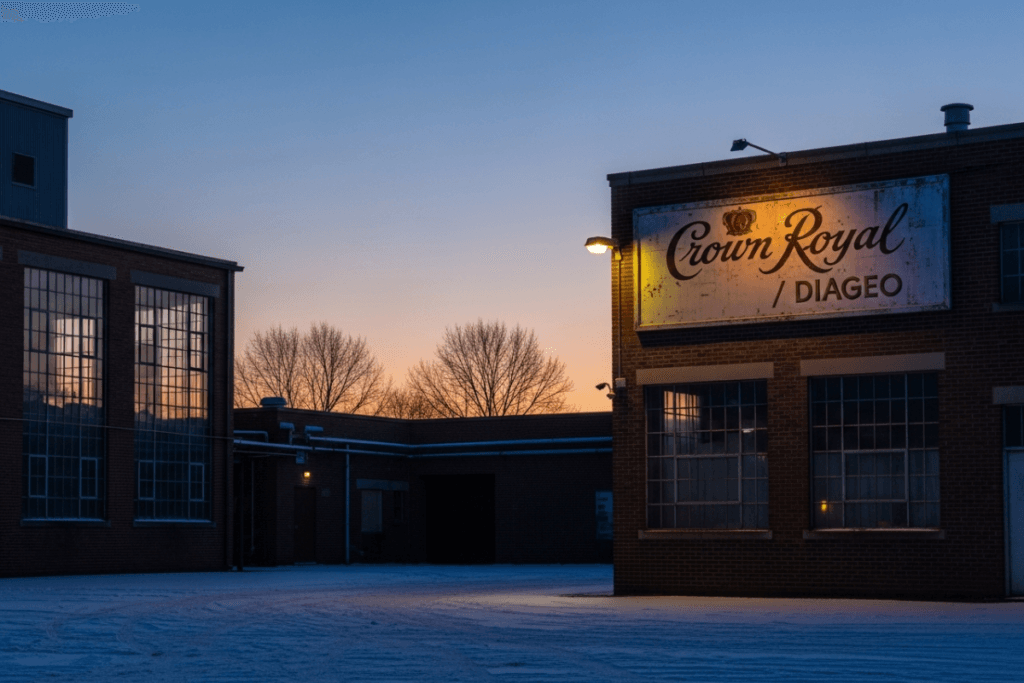
The Crown Royal story has taken over headlines again — and for good reason. The whiskey giant’s parent company, Diageo, is moving forward with plans to close its long-running bottling plant in Amherstburg, Ontario, a decision that has sparked emotional reactions, political outrage, and uncertainty for more than 160 workers.
Here’s a clear, human-centered look at what’s going on, why this is happening, and what might come next for the community.
A Deal Is Reached, but the Closure Is Final
Workers at the Amherstburg plant have now officially approved a closure agreement with Diageo. The deal includes:
- Severance and separation payments tied to seniority
- Extended health benefits after the shutdown
- Retirement credits for those close to retiring
- Funding for a local action centre to help workers with job searches, resumes, and retraining
Even with these supports, the mood has been heavy. Many employees have spent 20+ years at the plant with stable jobs, pensions, and benefits. Losing all of that in a single announcement has been “a hard pill to swallow,” as Unifor Local 200 president John D’Agnolo put it.
The plant is set to close in February 2026, and workers can either stay until the final day or leave earlier.
Why Is Diageo Closing the Plant?
Diageo insists the decision isn’t connected to tariffs or political tension. Instead, the company describes the move as part of a long-term strategy to make its supply chain more “efficient and resilient.”
The company plans to:
- Shift U.S.-destined bottling work to American facilities
- Move Canadian-market bottling to its Valleyfield, Quebec location
Diageo says it will still maintain other significant operations across Canada, including sites in Manitoba, Quebec, and the Toronto area.
The Political Firestorm: Doug Ford vs. Diageo
The closure sparked immediate backlash — especially from Ontario Premier Doug Ford.
In a widely shared moment, Ford emptied a bottle of Crown Royal on camera, accusing the company of “hurting Ontario workers” and calling its executives “half a brain” for moving production.
Ford later threatened to use the purchasing power of the LCBO — which spends $765M annually on Diageo products — to pull Crown Royal and Smirnoff from store shelves if the closure went ahead.
Provincial officials say nothing is off the table at this point.
Is Another Company Ready to Take Over the Plant?
Yes — possibly.
Amherstburg Mayor Michael Prue says there are at least two companies interested in taking over the facility after Diageo leaves. He confirmed meetings between the town and the province to prepare for potential buyers.
All interested companies are in the alcohol industry. And importantly, at least one wants to keep:
- The entire plant
- The machinery
- The 168 skilled employees who know the operation inside out
This could mean workers return to similar roles as early as March 2026 — if a deal goes through.
The challenge: Diageo owns the property, and must agree to sell. So far, they have not said yes, but talks are expected to begin now that the union agreement is finalized.
A Community in Transition
The closure impacts more than workers — it hits the local economy, families, and the identity of a town that has hosted the plant for decades.
Some workers have already left for new jobs. Others are unsure about the future.
Even with the supports negotiated, many still feel like they’re losing something irreplaceable: stable, well-paid jobs with benefits that supported generations.
Local leaders promise they’re “not giving up” on bringing new employers into Amherstburg.
What Happens Next?
Here’s what to expect in the coming months:
- Diageo continues operating until February 2026
- Workers stay or leave based on their preference
- Potential buyers prepare proposals for the plant
- The province weighs its response — including alcohol distribution measures
- The community supports workers through retraining and transition programs
The story is still unfolding, and Crown Royal remains at the centre of a national conversation about jobs, manufacturing, and corporate responsibility.
You can also check out our latest update on food safety news, including the recent Yoplait yogurt recall.
Conclusion
In the end, Crown Royal’s plant closure marks a major shift for Amherstburg, its workers, and Ontario’s liquor landscape. As negotiations continue and new buyers show interest, the community now waits to see what comes next — and whether a new operator can bring jobs and stability back to the region.
FAQs About Crown Royal
Is Crown Royal still Canadian owned?
No. Crown Royal is owned by Diageo, a British multinational beverage company. While the brand is Canadian in origin, ownership and management are international.
Is Crown Royal a bourbon or a whiskey?
Crown Royal is a Canadian whisky, not bourbon. It is known for its smooth taste and distinct Canadian whisky style.
What is the Crown Royal cost?
Prices vary depending on location and variety, but a standard 750ml bottle typically ranges between $25 and $50 USD. Special editions may cost more.
Is Crown Royal a cheap liquor?
Crown Royal is considered mid-range in price. It’s more expensive than budget liquors but generally affordable compared to premium or rare whiskies.





Leave a Reply